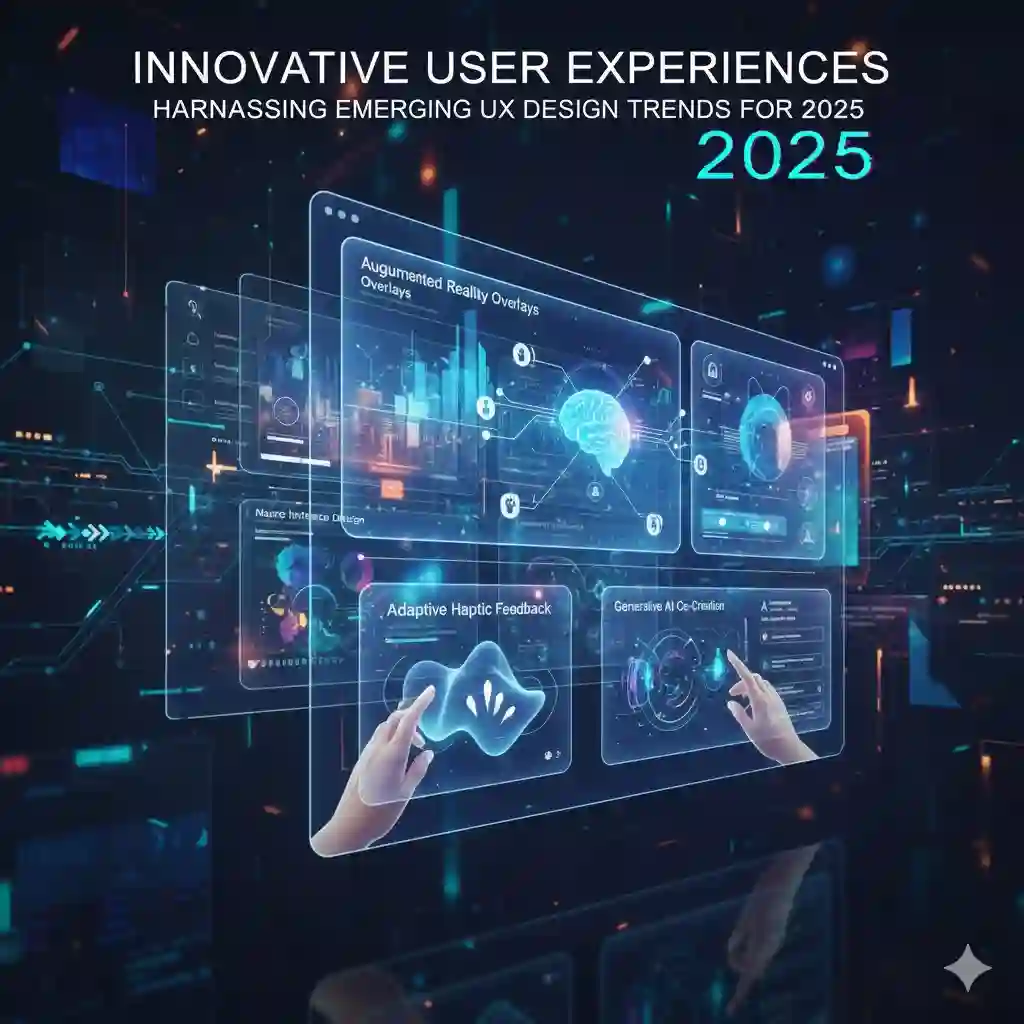
With the coming age in 2025, the environment on user experience (UX) design is changing at an alarming rate, which is influenced by technology, varying expectations of users, and the need to make business competitive. The UX design has ceased to be purely about the aesthetic; it is about meaningful interactions between users that will create loyalty. In this blog post, the author discusses the trend in UX design in 2025, including the way businesses can use the trends to generate attractive user experiences.
The Importance of User Experience in the Modern Digital World
User experience is all about interaction of a user with a product/service. In a world where digital touchpoints are everywhere, the role of UX is difficult to overestimate. When the UX is positive, it results in improved user satisfaction, a higher conversion rate, and improved brand loyalty. On the other hand, users may be driven away and a brand may be badly publicized as a result of bad user experience.
As technologies are rapidly evolving, and the nature of consumer needs and behaviors is changing, designers are forced to be ahead of the pack to develop experiences that satisfy and surpass the users demands. The following are the most innovative trends in UX design that are projected to dominate the industry in 2025.
1. Hyper-Personalization
Hyper-personalization refers to the ability to customize user experiences according to their likes and dislikes, behavior and demographics. The emergence of artificial intelligence (AI) and machine learning makes it possible to analyze user data and provide tailored content and experience in real-time to businesses.
The most important Hyper-Personalization Strategies:
-
Datalytics: Use datalytics technologies to extract information regarding user behaviour and preferences.
-
Dynamic Content: Use mechanisms revealing the ability to modify content according to user activity thus a personalized experience.
-
Bespoke Interfaces: Create interfaces that can adjust to the needs of users and thus, navigation becomes user-friendly and meaningful.
2. Voice User Interface (VUI)
There is a growing popularity of voice user interfaces due to the emergence of voice-activated devices. It has been projected that more than 50 percent of the total searches made online will be voice search by 2025. The voice interaction design cannot be done in the same way as the traditional interface.
VUI Design considerations:
Natural Language Processing: Figure out the way to comprehend and manipulate natural language so that it is able to talk.
Contextual Awareness: Check that the VUI is able to understand the context enhancing the relevance of responses.
Accessibility: Design voice interfaces to be accessible to users with disabilities or users who might prefer to use audio-based interactions.
3. Virtual Reality (VR) and Augmented Reality (AR)
AR and VR are changing the interaction of the user with the digital content. All these immersive technologies are likely to be mainstream in different industries by 2025, such as retail, education, and entertainment.
The application of AR and VR to UX Design:
-
Immersive Experiences: Develop experiences where users can virtualize with the products and increase customer engagement.
-
Real-World Integration: Overlay AR can be used to superimpose digital information onto the physical world to enable users to gain more contextual knowledge.
-
User-Centric Design: Approach should be intuitive, by recreating behaviors in the real world, the user should find it easy to navigate AR and VR space.
4. Biometric Authentication
As the issue of data security and privacy is becoming more relevant, biometric authentication is becoming a more convenient and safe way to access the information. Biometric systems (facial recognition, fingerprint scan and voice verification) will be incorporated in numerous applications by 2025.
Advantages of Biometric Authentication in UX:
Better Security: Biometric systems increase the level of security and minimize the chances of unauthorized access.
Flawless Experience: Authentication of the identity is performed fast and effectively without the use of passwords.
Trust Building: Biometric security can bring about trust among the users as they will have a sense that their data is secure.
5. Minimalistic and Functional Design
With the increasing information saturation, minimalistic design is taking the centre stage. By 2025, the emphasis will be put on designing clean and functional interfaces incorporating the needs of the users and making navigation easier.
Minimalist Design Ideals:
-
Clarity: Clarity is achieved through the use of clear typography and whitespace to create an emphasis and clarity.
-
Functionality: This requires the removal of unnecessary parts of a product, so that every part has a role.
-
User-Centric: Design It should be user-centric with a focus on the ease of use and easy navigation.
6. Sustainability in UX Design
The increased awareness of the environment has seen users turn to brands that are more sustainable in nature. The UX designers can help with this trend by designing digital experiences that are environmentally friendly.
Sustainable UX Design Strategy:
Green Hosting: Select eco-friendly hosting services which utilize renewable energy.
Resource Optimization: Design applications that use fewer data and power and help in reducing the carbon footprint.
Encouraging Sustainability: UX can promote sustainable practices and support environmentally friendly habits of the users.
7. Emotional Design
Emotional design is aimed at producing products which cause positive emotions to users. Emotional intelligence will become an important part of the UX design by 2025, as companies will strive to establish more intimate relationships with their customers.
Emotional Design Techniques:
-
Storytelling: Employ stories to allow users to be emotionally involved to make them identify with the brand.
-
Visual Aesthetics: Use colors and typography and imagery to provoke a certain feeling and response.
-
User Feedback: Add user feedback loops to know how people would feel about designs and modify the designs.
8. Continuous User Feedback
In a world of high paces, iterative design requires the collection of constant user feedback. By the year 2025, real-time feedback tools, including surveys and usability testing, will be used by businesses to optimize user experiences.
The adoption of Continuous Feedback:
-
User Testing: The User Testing should be carried out frequently to provide input on usability and satisfaction.
-
Feedback Tools: Get tools to enable users to give instant feedback during their interactions.
-
Agile Design Processes: Embrace agile principles whereby a rapid change is brought about by user-feedback.
Conclusion
By 2025 the UX design landscape will undergo great changes. Businesses can develop novel user experiences that appeal to their audiences by adopting the emerging trends of hyper-personalization, voice interfaces, AR/VR, biometric authentication, minimalist design, sustainability, emotional design, and continuous feedback. The future of UX design does not merely consist of trendiness; it is about creating valuable engagement that will make the user experience meaningful and will result in brand loyalty.
Within a competitive market, these innovative UX design strategies will make businesses succeed because they will be on top of their needs as they grow and develop with the changing needs of their users.
FAQs
1. What is hyper-personalization in UX design?
Hyper-personalization means identifying user experiences in terms of their preferences and actions individually using data analytics. It will increase the level of interaction providing custom-made content and interfaces that are appealing to the users.
2. What are the benefits of AR and VR to user experiences?
AR and VR offer immersion, which enables users to engage with new digital content in a different way. These technologies advance the interaction, as they form three-dimensional worlds that make the learning, shopping, and entertainment experiences more vivid.
3. What is the significance of emotional design in UX?
The emotional design is essential since it builds a stronger relationship between the users and the brands. Brands will be able to increase user satisfaction and loyalty by creating positive emotions with stories and aesthetics.